Your Client Just Asked 'Why Didn't We Catch That Trend?' Here's How to Never Hear That Again
Your Client Just Asked 'Why Didn't We Catch That Trend?' Here's How to Never Hear That Again
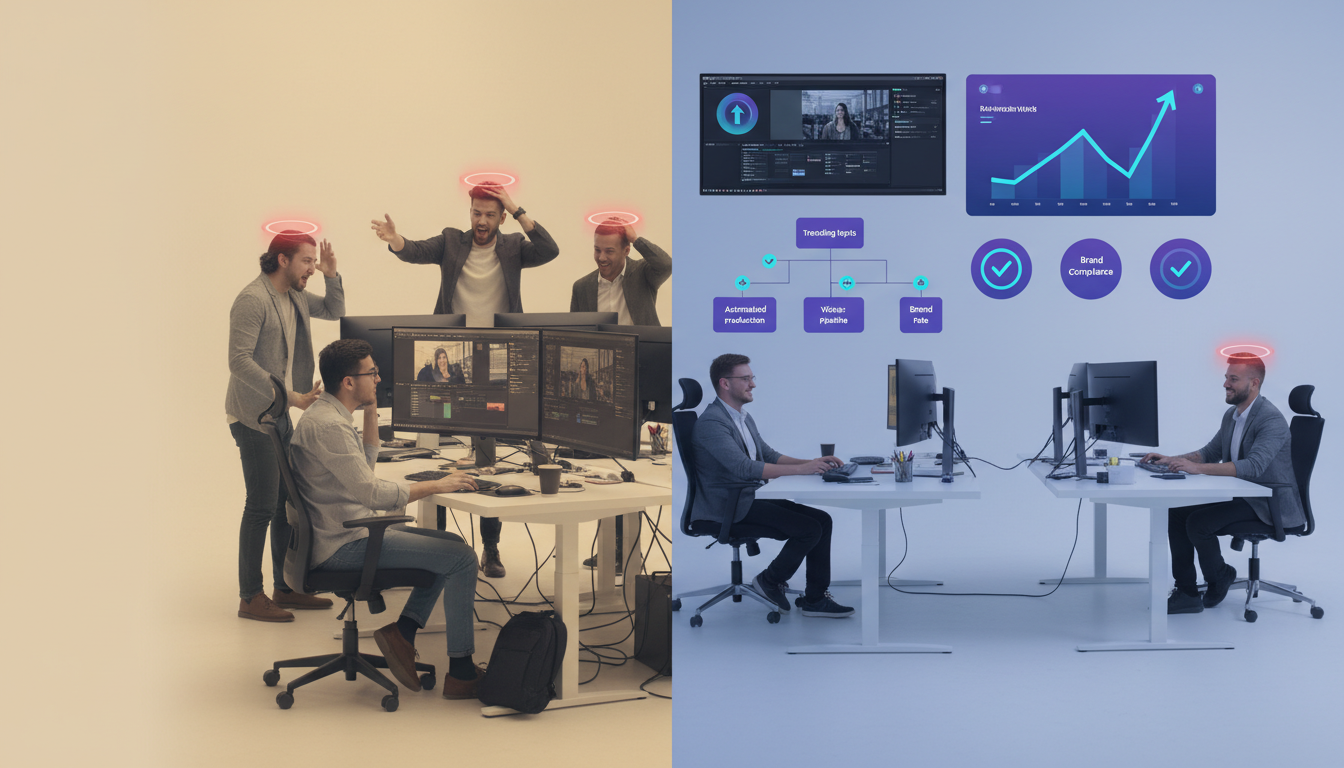
It's 3 PM on a Tuesday when your phone buzzes. Your client's text makes your stomach drop: "Why didn't we catch that trend? Our competitor just went viral with it and we look like we're asleep at the wheel."
Sound familiar? If you're running a digital marketing agency in 2026, you've probably had this conversation more times than you care to count. To stay relevant, brands must catch the trend while it's still rising. This may require a response within a few hours of a trend emerging. The problem isn't your team's creativity—it's your system for spotting trends before they peak.
Step 1: Set Up Predictive Trend Monitoring That Actually Works
Forget about scrolling through feeds hoping to spot the next big thing. To keep up, social media managers must know which signals to watch so they can spot emerging trends before they peak (and fade). With the right tracking tools, your social team can spot these shifts early.
A social listening framework provides structure and agility to your trend-tracking. Use a tool like Talkwalker to set up comprehensive trend monitoring queries and alerts based on your goals. Here's how to build your early warning system:
Configure Multi-Platform Monitoring
- Set up keyword clusters around your clients' industries
- Track hashtag velocity across TikTok, Instagram, and YouTube
- Monitor audio trends and viral sounds before they explode
- Watch for micro-influencer adoption patterns
Build Alert Systems That Matter
Monitoring tools alert you to issues within minutes, not hours. This lets you respond quickly and prevent small complaints from becoming PR disasters. Configure alerts for:
- Sudden spikes in mention volume (200%+ increase)
- New hashtags gaining traction in your space
- Competitor content getting unusual engagement
- Cross-platform trend migration signals
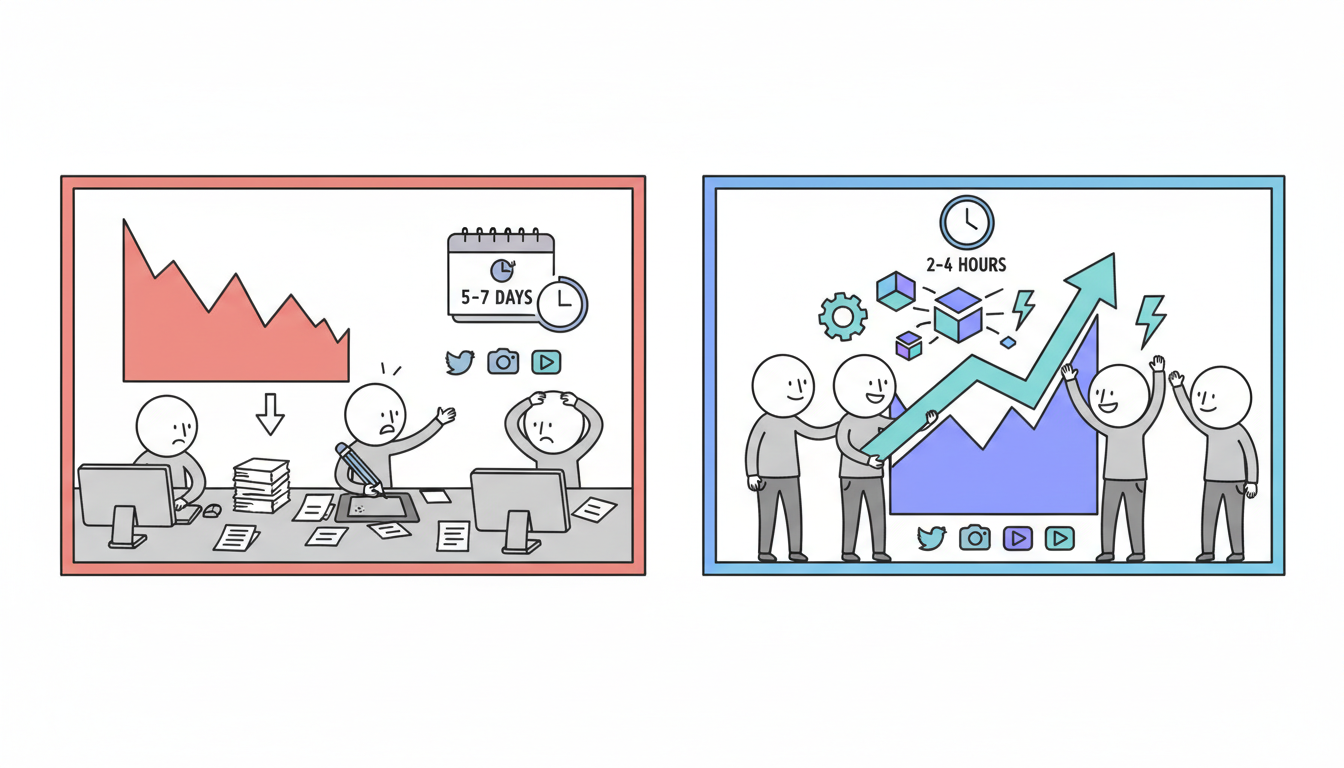
Step 2: Create Brand-Compliant Video Content in Under 4 Hours
Once you spot a trend, speed becomes everything. Speed is non-negotiable in 2026 – things move fast. Brands are expected to respond to cultural happenings almost instantly, as algorithmic shifts reward the sameness of content in the wake of a viral moment.
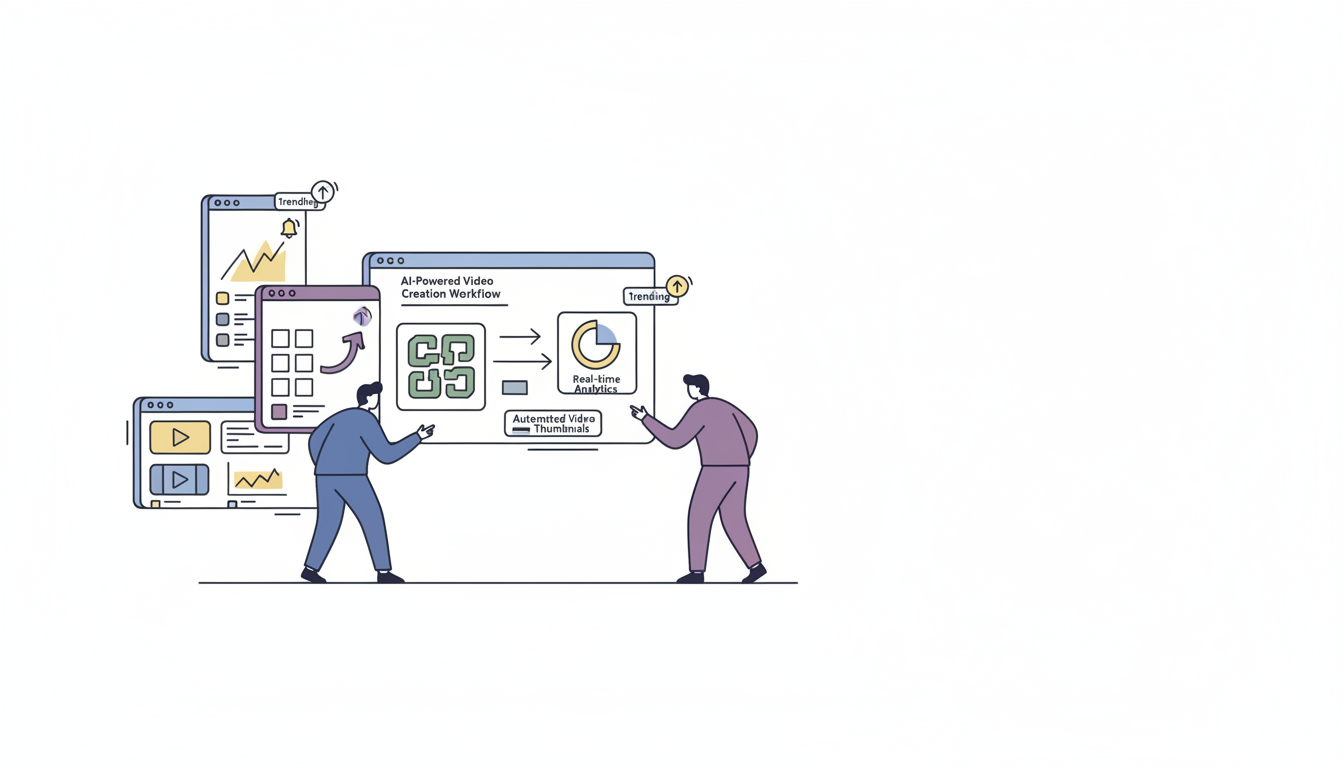
The secret isn't working faster—it's working smarter with AI-powered workflows.
Hour 1: Rapid Concept Development
- Use trend analysis to identify the core viral element
- Brainstorm 3-5 brand-safe adaptations
- Check competitor responses to avoid overlap
- Select the strongest concept for production
Hour 2-3: Automated Video Generation
AI video creators, such as HeyGen, cut production costs by up to 70 percent. Modern AI video tools can:
- Generate platform-specific formats (9:16 for TikTok, 16:9 for YouTube)
- Maintain brand colors and visual consistency
- Create multiple variations for A/B testing
- Auto-generate captions and text overlays
Hour 4: Brand Compliance and Approval
Set up streamlined approval workflows where:
- Brand guidelines are built into content templates
- Auto-flagging prevents off-brand elements
- Stakeholder approval happens via mobile notifications
- Final assets export in all required formats
Step 3: Integrate Into Existing Client Approval Processes
Streamlined approval workflows and employee advocacy tools are critical for the best results. The biggest bottleneck in trend-responsive content isn't creation—it's approval.
Create "Trend Response" Content Buckets
Pre-approve content categories so you can move fast:
- Industry commentary (always approved)
- Product integration templates (pre-reviewed)
- Brand personality responses (guidelines-based)
- Crisis communication protocols (emergency-ready)
Implement Real-Time Approval Tools
- Use collaborative platforms with instant notifications
- Set up mobile approval workflows for key stakeholders
- Create "auto-approve" rules for low-risk content types
- Establish 2-hour maximum approval windows for trending content
Step 4: Track Performance to Prove Viral Content ROI
Your clients need proof that trend-responsive content drives results. Marketers can prepare in a variety of ways: audit data and workflows, adopt AI carefully, formalize creator/UGC programs, build social SEO habits, and track outcome-based KPIs.
Set Up Cross-Platform Analytics
Track these metrics across all platforms:
- Engagement velocity (likes per hour in first 24 hours)
- Share-to-impression ratios
- Profile visits and follower acquisition
- Website traffic from trending content
- Lead generation from viral posts
Calculate True ROI Impact
- Track cost-per-engagement on trending vs. regular content
- Measure brand sentiment during viral moments
- Document client acquisition linked to viral content
- Monitor long-term engagement rate improvements
By connecting social campaigns with website performance, freelancers can prove ROI to clients. This builds trust and long-term relationships.
Step 5: Build Crisis Prevention Systems
The best agencies don't just catch trends—they prevent the crises that come from missing them.
Competitive Intelligence Monitoring
Track the performance, posting frequency, and strategies of your competitors across all media. Keep an eye on the public's perception of your competitors with thorough sentiment analyses that show what people think and say about your brand and competitors.
Set up weekly competitor audits:
- Track what trends competitors are adopting
- Monitor their engagement patterns
- Identify gaps in their trend coverage
- Document successful trend adaptations
Build Industry Trend Libraries
Create searchable databases of:
- Successful trend adaptations in your industry
- Brand-safe ways to join cultural conversations
- Template responses for common trend types
- Emergency response protocols for negative trends
The Reality Check: Why Most Agencies Fail at Trend Monitoring
When approvals take weeks, relevance disappears. Speed becomes a performance advantage because it lets teams test, learn, and refine content while the moment still matters.
The agencies still asking "Why didn't we catch that trend?" are making the same mistakes:
- Treating trends as one-off opportunities instead of systematic workflows
- Relying on manual monitoring instead of AI-powered alerts
- Creating complex approval processes that kill speed
- Measuring vanity metrics instead of business impact
In 2026, workflow is strategy. Brands that win are not always the most creative, they are the ones that ship consistently and learn publicly, which is why social media trends 2026 reward operational speed.
Your Next Steps
Trend-responsive content isn't about chasing every viral moment—it's about building systems that let you move fast when the right opportunity appears. Start with these three immediate actions:
- This week: Set up automated trend monitoring alerts for your top 3 clients
- This month: Create pre-approved content templates for trend responses
- This quarter: Build ROI tracking dashboards that connect viral content to business results
The agencies winning in 2026 aren't the ones with the biggest budgets or most creative teams. They're the ones with the smartest systems.
Ready to build trend-responsive workflows that keep your clients ahead of the competition? Learn more about automating your video content creation and never miss another viral opportunity.
AI Social Media Marketing Video Automation
TrendCraft AI is an automated video production platform designed specifically for digital marketing agencies managing mu
Discover what we're building
Learn more about AI Social Media Marketing Video Automation and get started today.
Visit AI Social Media Marketing Video Automation